

Every month, we pull a prompt from our BreakBread World Conversation Card Deck and offer a reflection. This month we pulled the “honor” prompt:
What does honor mean to you? Does honor or acting honorably matter?
Honor seems out of fashion these days. That’s the stuff of our parents. Being “lady-like”, honor thy mother and father, doing the “honorable” thing, honoring our soldiers. Yet, honor is in my bones.
The night after my father’s memorial service, a bucket of military medals were laid out on the kitchen island of my sister’s house. My three older siblings rifled through the clinking pins and ribbons, choosing which they would claim as theirs. Their childhood was marked by my late father’s military service. They remember the service uniforms, combat utility, dress uniform, the wartime stints, the practice missions. He had retired by the time I was six; my little brother was one or two years old.
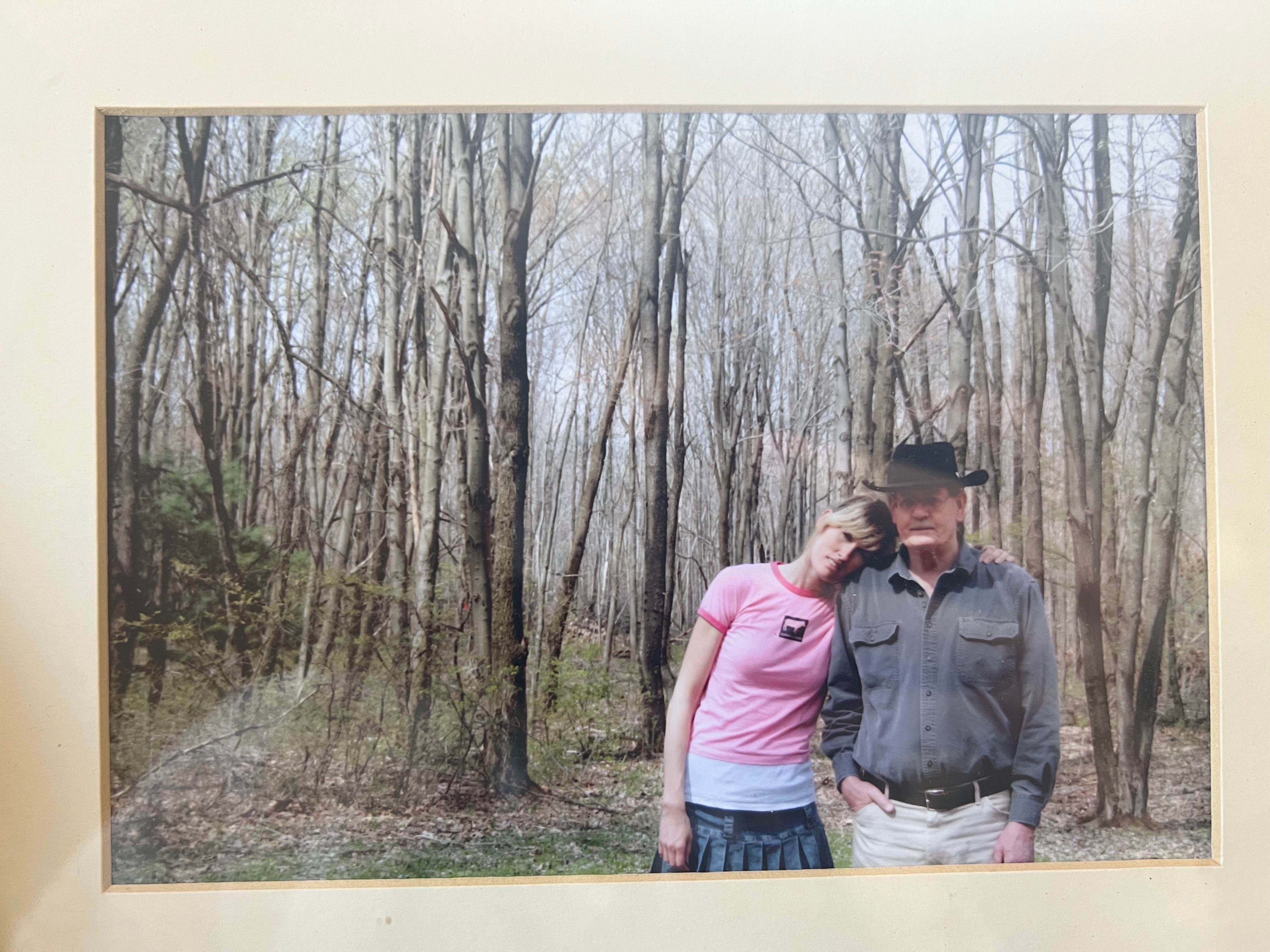
After 20 years of military service, my Pop chose another honorable line of service: Episcopal priesthood.
He was still brawny: cutting wood for exercise, kayaking through the marshes of North Carolina, running with the dogs, swimming across lakes, lifting. But instead of medals and military uniforms, there was church regalia: clerical collars and robes, round yoke surplices, intricate stoles. My childhood Pop was marked by late nights of sermon writing, visits to the parishioners and the sick and infirmed, handling parish politics. So on the night the three older siblings were calling dibs on medals, I took one of his clergy robes instead, imagining the possibility of making a beautiful dress from it one day.
When I visited one of my older brothers over Christmas, his wife declared that he had made an altar in his office of your Pop’s military medals. She said it as if surprised. I guess she was seeing it through the eyes of a psychotherapist, her profession, “How could you honor your father who couldn’t give you what you needed as a son?”
The thing is, the Williams kids have been inculcated with a sense of honor: a deep respect for service and the dedication to doing what is considered right. So despite his shortcomings, we honored his longcomings (why isn’t that an official word?).
In other cultures and older times honor had a more prominent place in the vanguard of values. For example, what about disowning a child who has “dishonored” the family, like a woman I knew from Japan who was disowned by her family for her “rebellious” art-making. Or in the past, the undue burden on women to “defend their honor” by maintaining virginity while men were free to do as they wish without harm to their reputation. Maybe that’s why honor seems out of fashion, because honor of the olden days could feel rigid, formal and male-dominated.
So I get it that honor can feel a bit stodgy, a bit tight in the shoulders, and even lock-jawed. But the desire to do right, the desire to be good, the desire to respect: these are all powerful forces.
As we begin to dismantle the dominant culture, perhaps we find a healthier relationship to honor.
Like I said earlier, for me, this “honor thing” lives in my bones or more pointedly it lives in the heart. I know this because I always cringe when someone disrespects a ceremony and I also cry when someone is honored at a ceremony. For me, honor is a relationship to the world that says “I respect you, I respect life.” Imagine a world brimming with respect!
The type of honor I am talking about is not the kind where I honor you because you’re a winner or because you’ve accomplished so much. It is the type of honor where I honor you because you ARE life – cyclical life: growing and dying and fighting and feeling. For example: I honor the way you show up early to help, the way you make jokes when you’re uncomfortable, the anger that consumes you, the incredible talent. I honor this fullness, this wild spectrum.
Honor, for me, is about the deliberate act of seeing and naming and receiving what is. It is the openness of the heart. At BreakBread World, honor is the ground we stand on. It is the perspective we hold and embody. When we do that, the conversation opens to new levels, our relationships bloom into a strengthened social fabric. That said, we’ve found that this “honoring” ethos can make people who lean more towards cynicism a bit squirmy, which can be understandable, considering the history we’re shedding.
As for the Pop altar, I imagine my brother understands that even though my father didn’t give him what he needed, Pop centered his life on doing what he felt was right – by being a devoted soldier, devoted clergy person, and a devoted husband.
Perhaps he is honoring that and on some level he may be honoring the pain of not quite having the connection he longed for. Death can have a way of opening our hearts to the bigger picture and the paradox of love. And honoring the family and friends we have lost is a way of sparking the fullness of life, the wild spectrum of living.
For me, I felt a relief when my father died, his spirit somehow finally freed from the honorable, good, devoted authority he cherished but that also held him back on some level. Now I feel his big heart soaring, loving me and my siblings in a new, refreshed and powerful way – beyond the call of earthly duty and into the call of spirit, God, ancestor.
As for this BreakBread prompt, could honor be a foil for something deeper? Something deep in the culture, in the tradition, in humanity?
Of course! Anything could be a foil for something deeper. Because answers, meaning, history, experience, life and relationships hum deep below the surface of our every day.
What’s your experience with honor? Have a conversation with a friend or host a BreakBread and let us know how it goes.
So beautiful, Martha. I appreciate learning more about you, your childhood, your family, your Dad. Honoring as receiving, seeing, hearing each other - definitely much needed skills/attitudes to cultivate in today's mad, mad world. Thank you for this!
Longcoming - brilliant word!